Product Breakdown
Product Breakdown
Internal & External Study
Internal & External Study
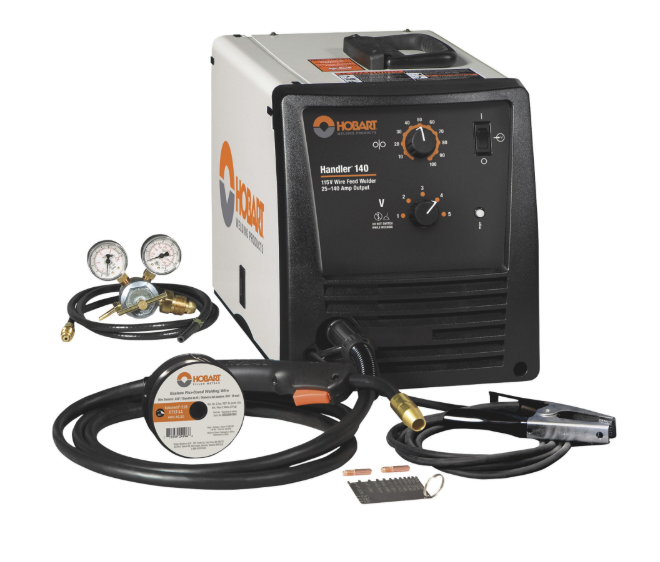
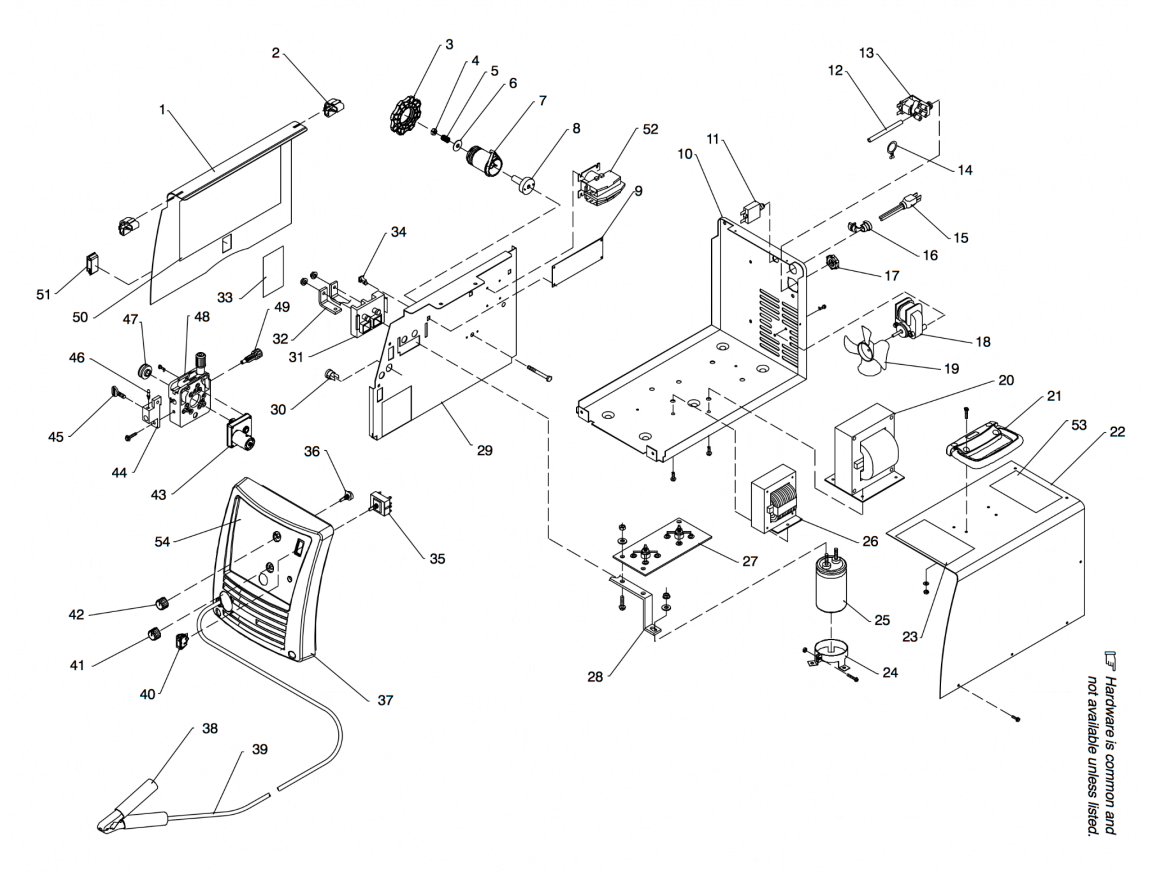
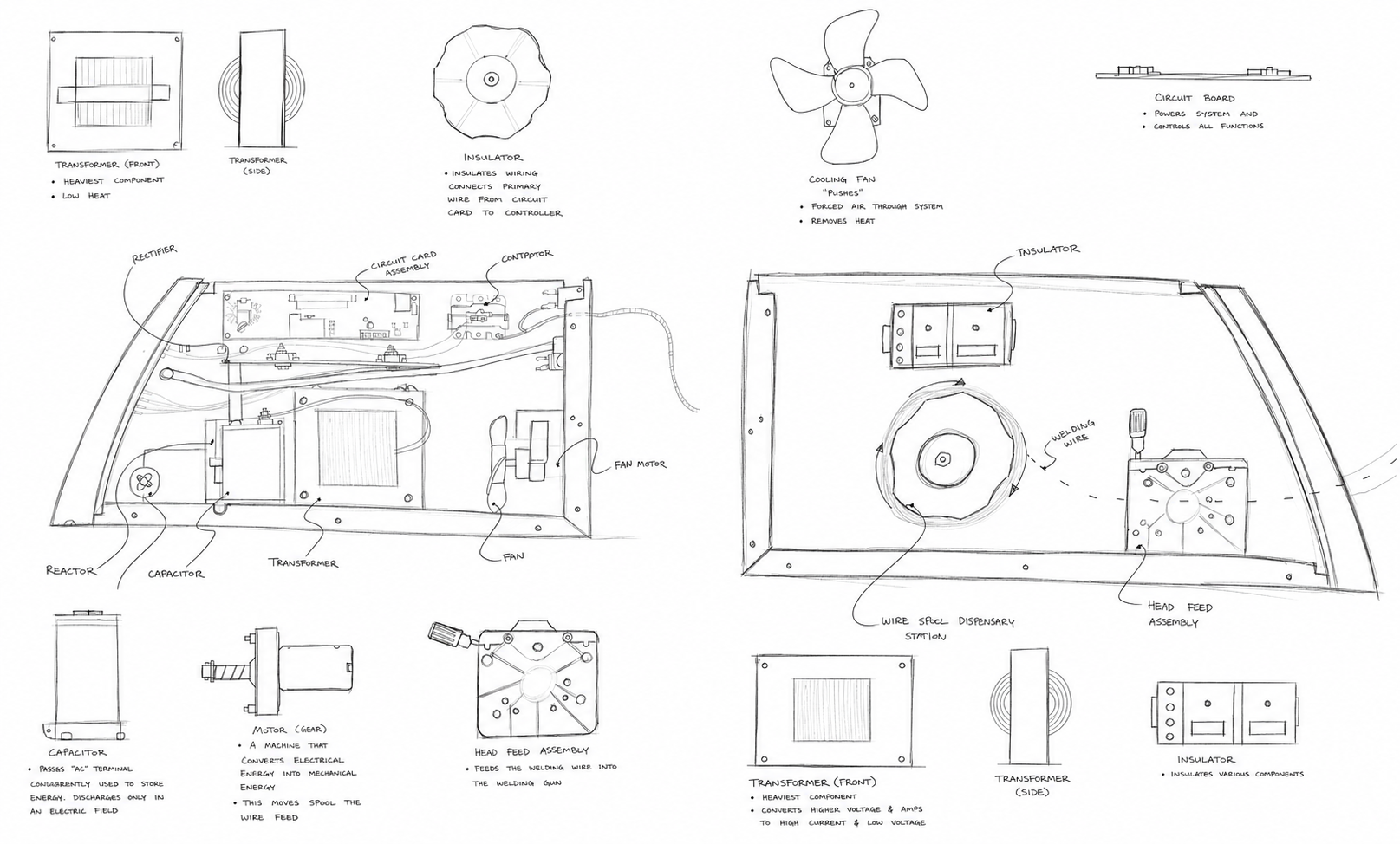
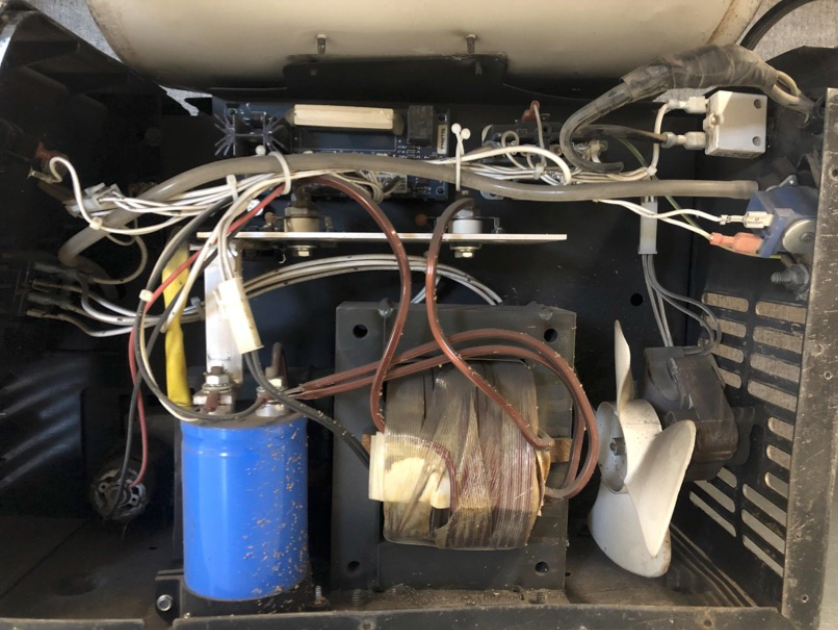
To get more familiarized with how a portable welder functions and its internal components, a decommissioned Hobart Handler 140 was deconstructed, and all of its core internal components were sketched out and documented.
Portable welders offer the flexibility to weld projects onsite rather than limiting fabrication to the metal shop. However, that does not mean they come without drawbacks.
Final Concept
Final Concept
User research
User research
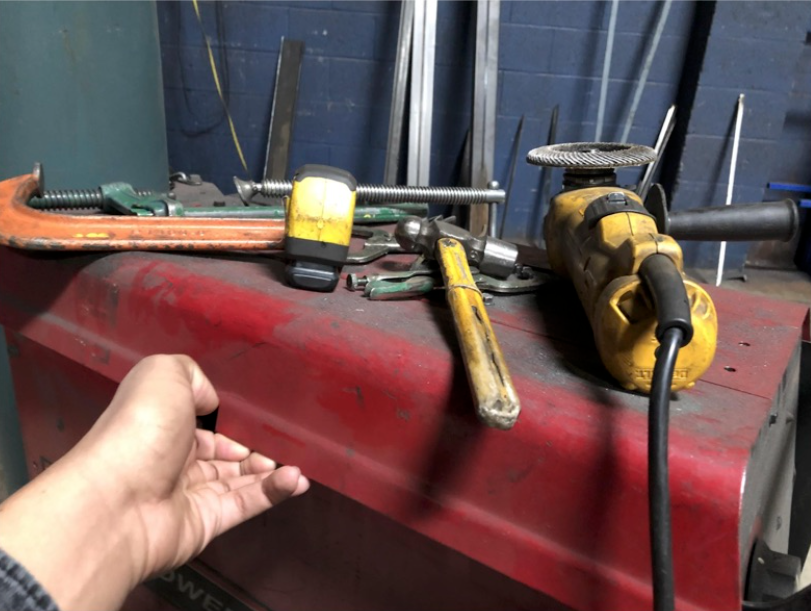
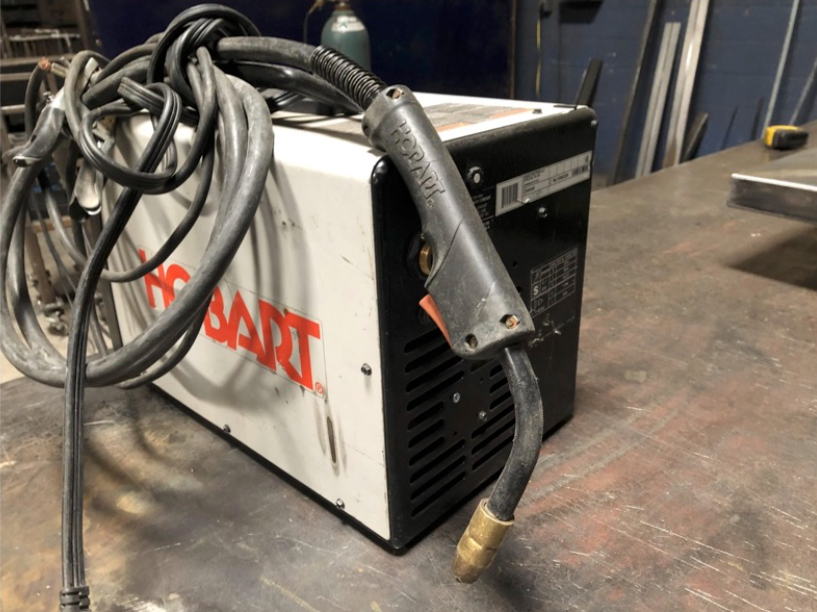
There exist no proper storage method for the welding gun, making it messy, hard to carry, and ultimately susceptible to damage, while creating a tripping hazard for the user.
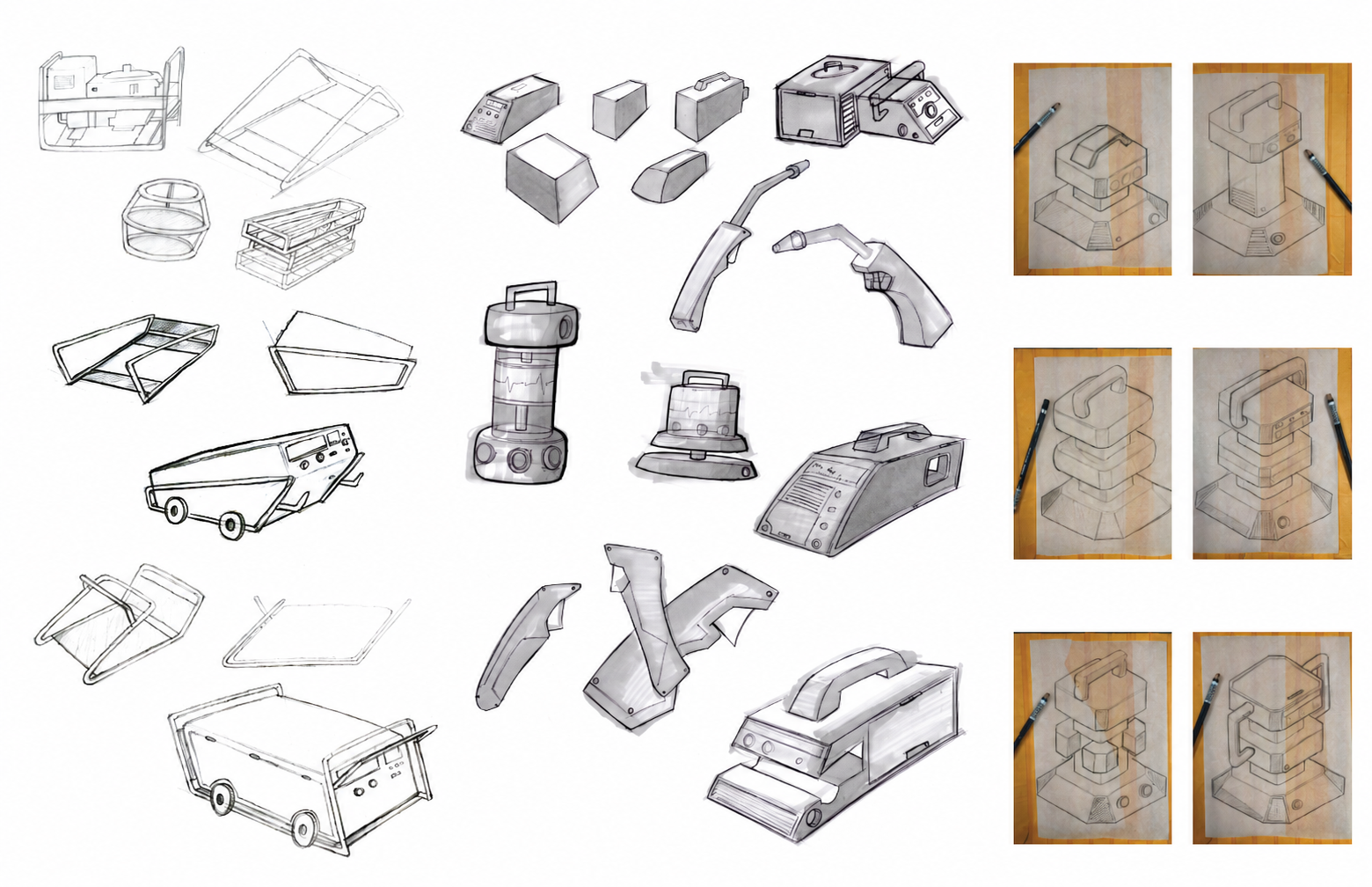
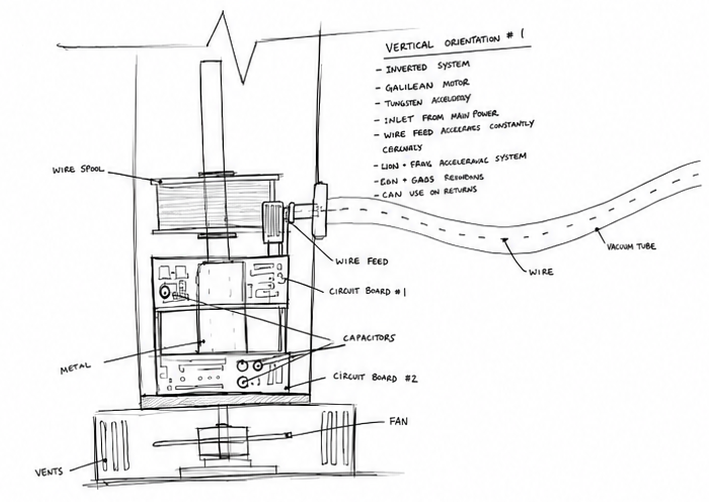
After becoming familiar with an existing portable welder and its inner workings, new drivetrain layouts and aesthetic opportunities were explored through engineering sketches, isometric iterations, and continued rapid prototyping.
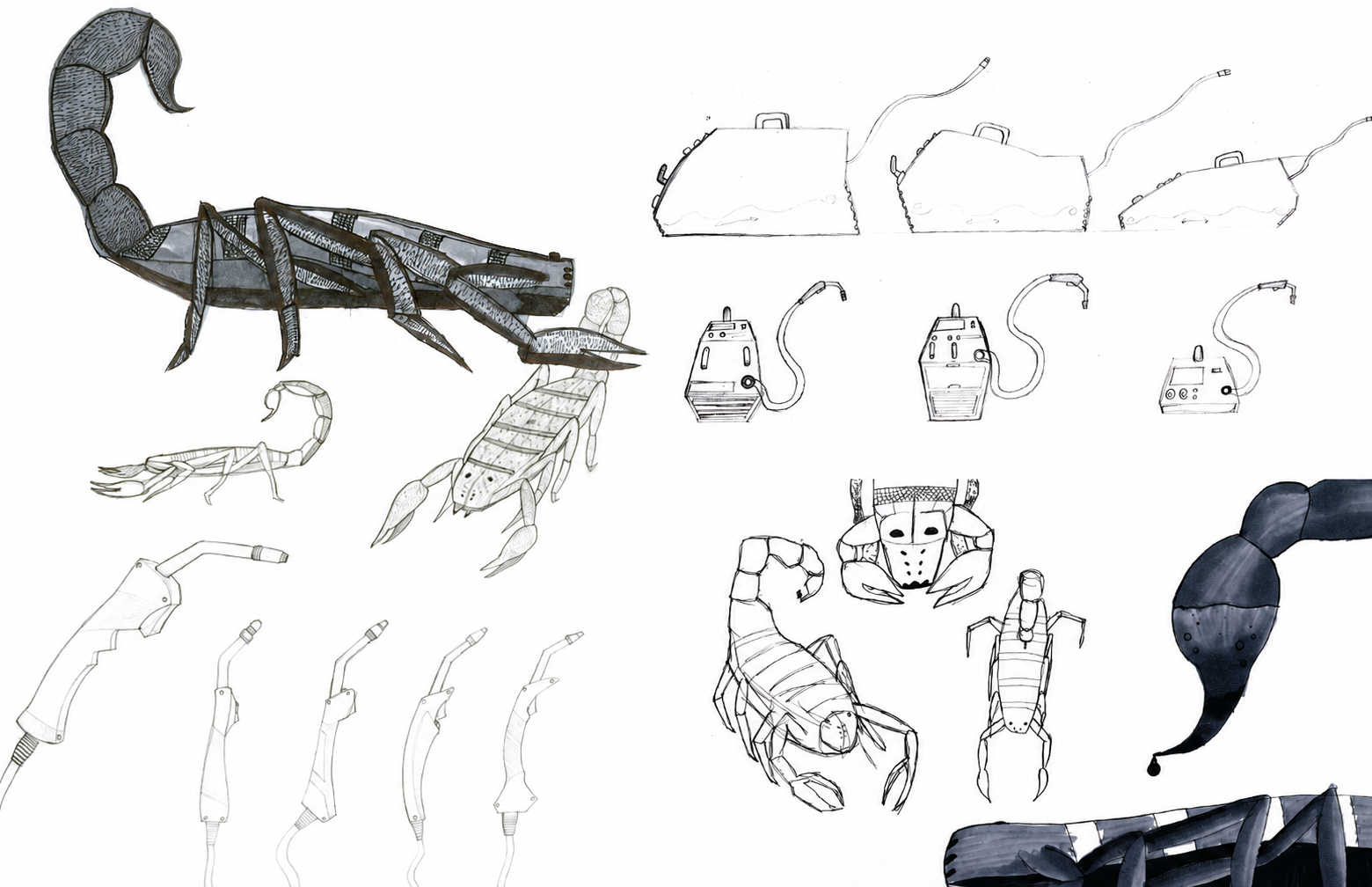
While exploring potential aesthetic routes, the anatomy of a scorpion came to mind, with its long arching tail and set of claws. This aesthetic was chosen to be the final design theme for the new welder.
The objective of the first batch of sketching was to get into a groove of sketching the welder form consistently, so that iteration would flow smoother. After getting used to the standard form, more nuanced designs were produced to take into the next step.
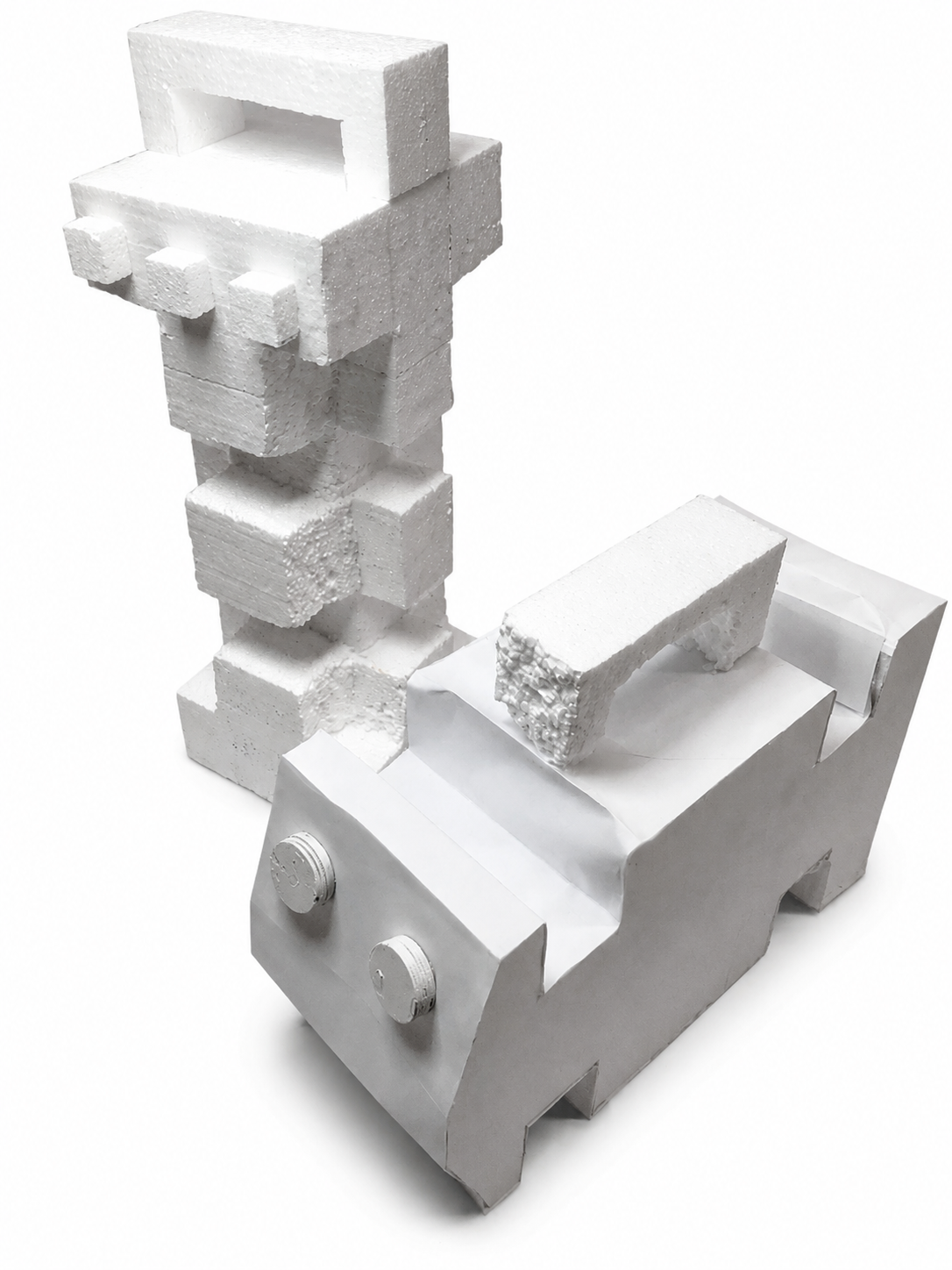
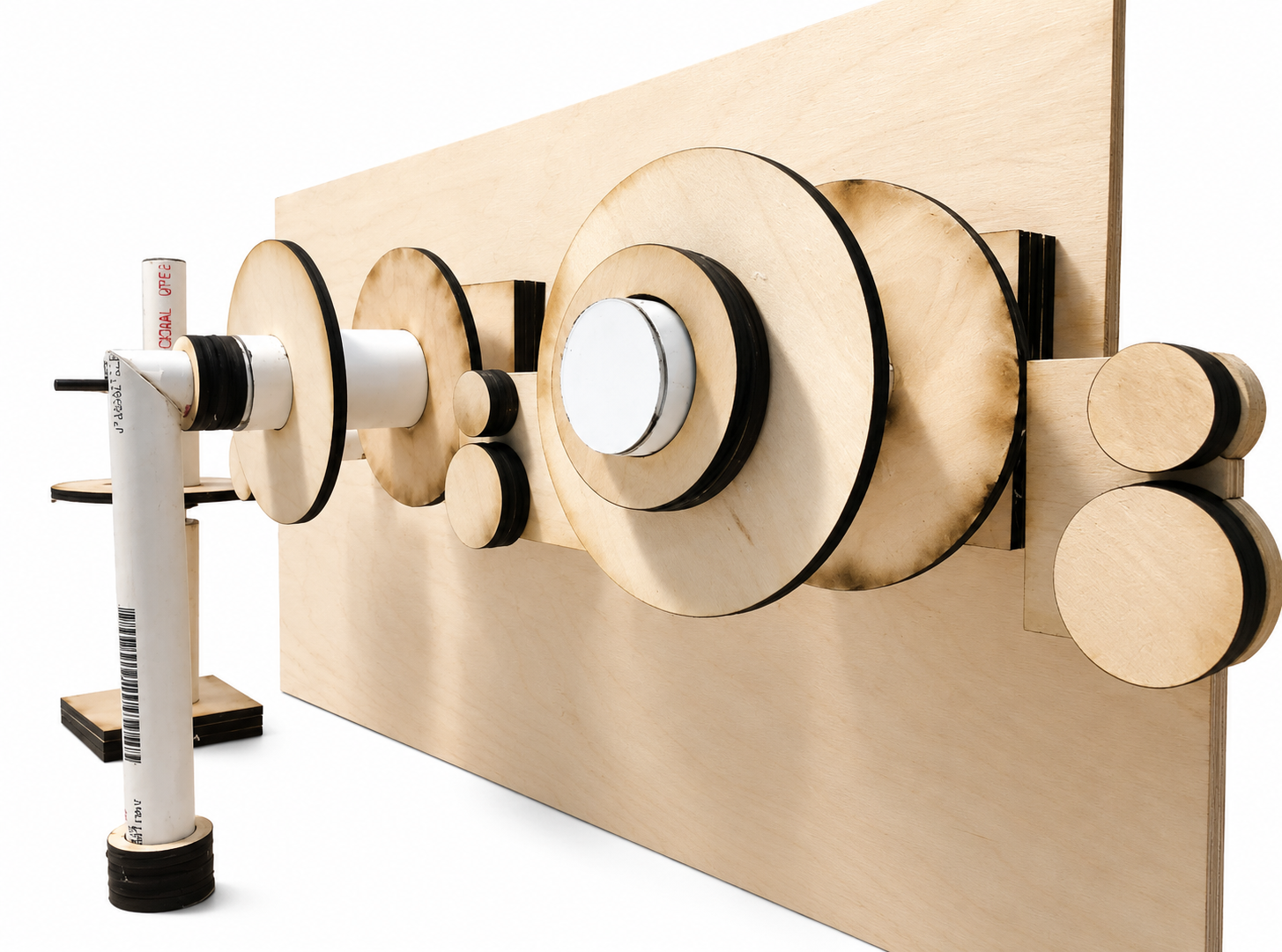
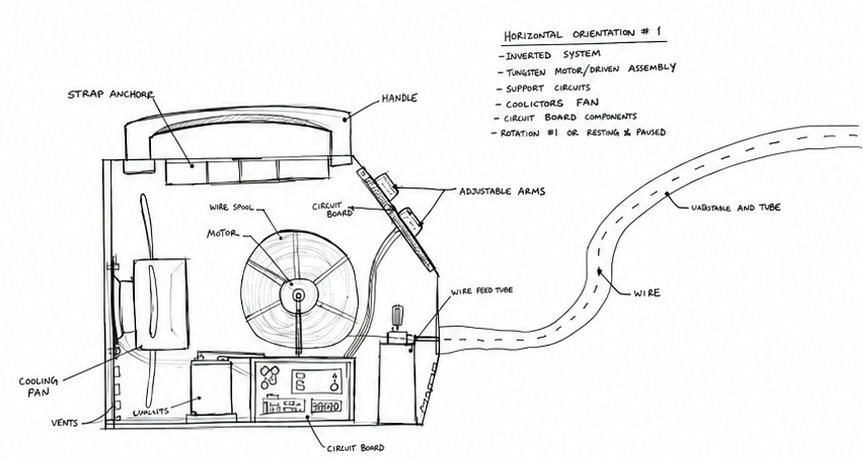
Drivetrains options were modeled using laser cut wood and PVC pipe, and two final forms were explored through sculpting of Styrofoam.
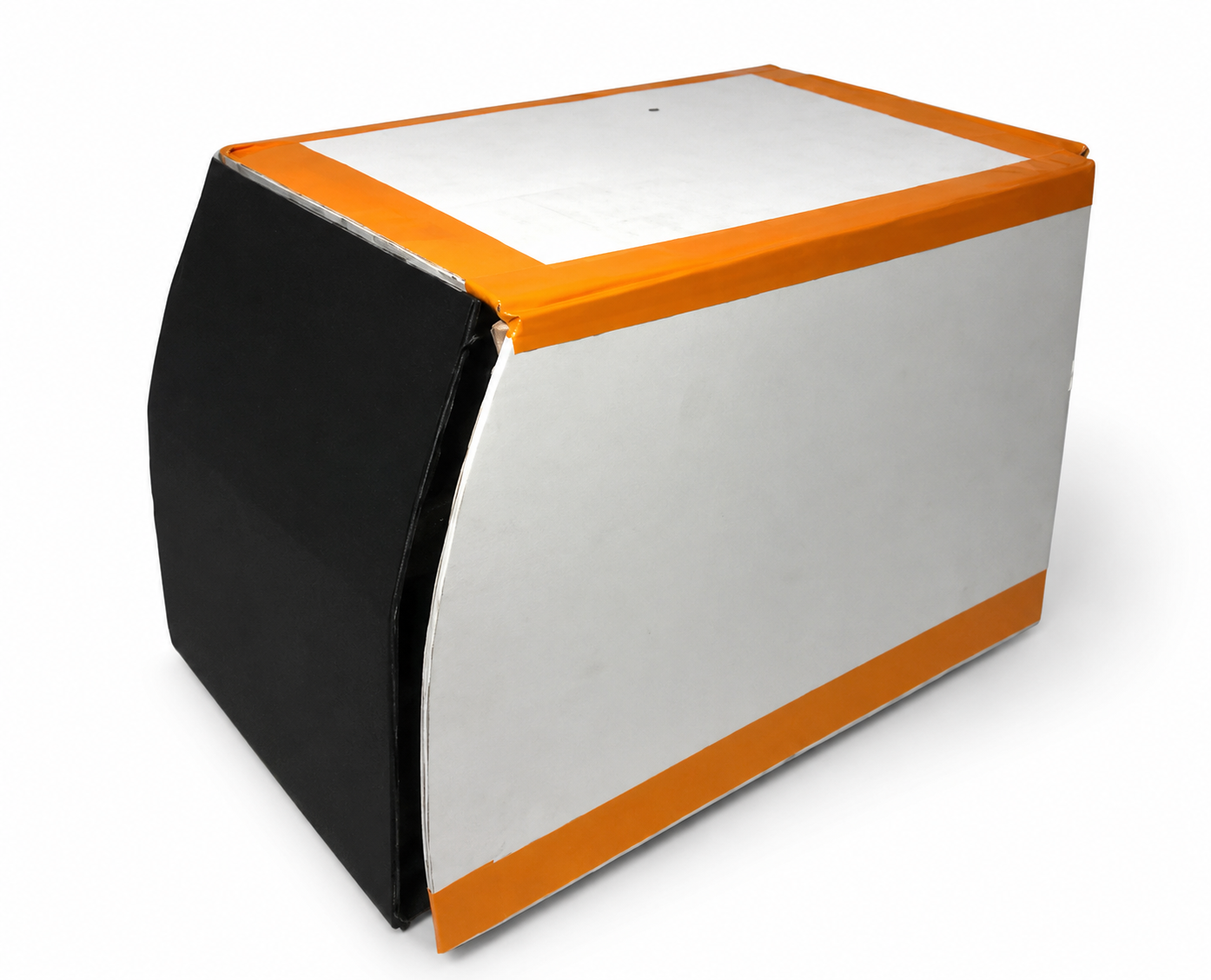
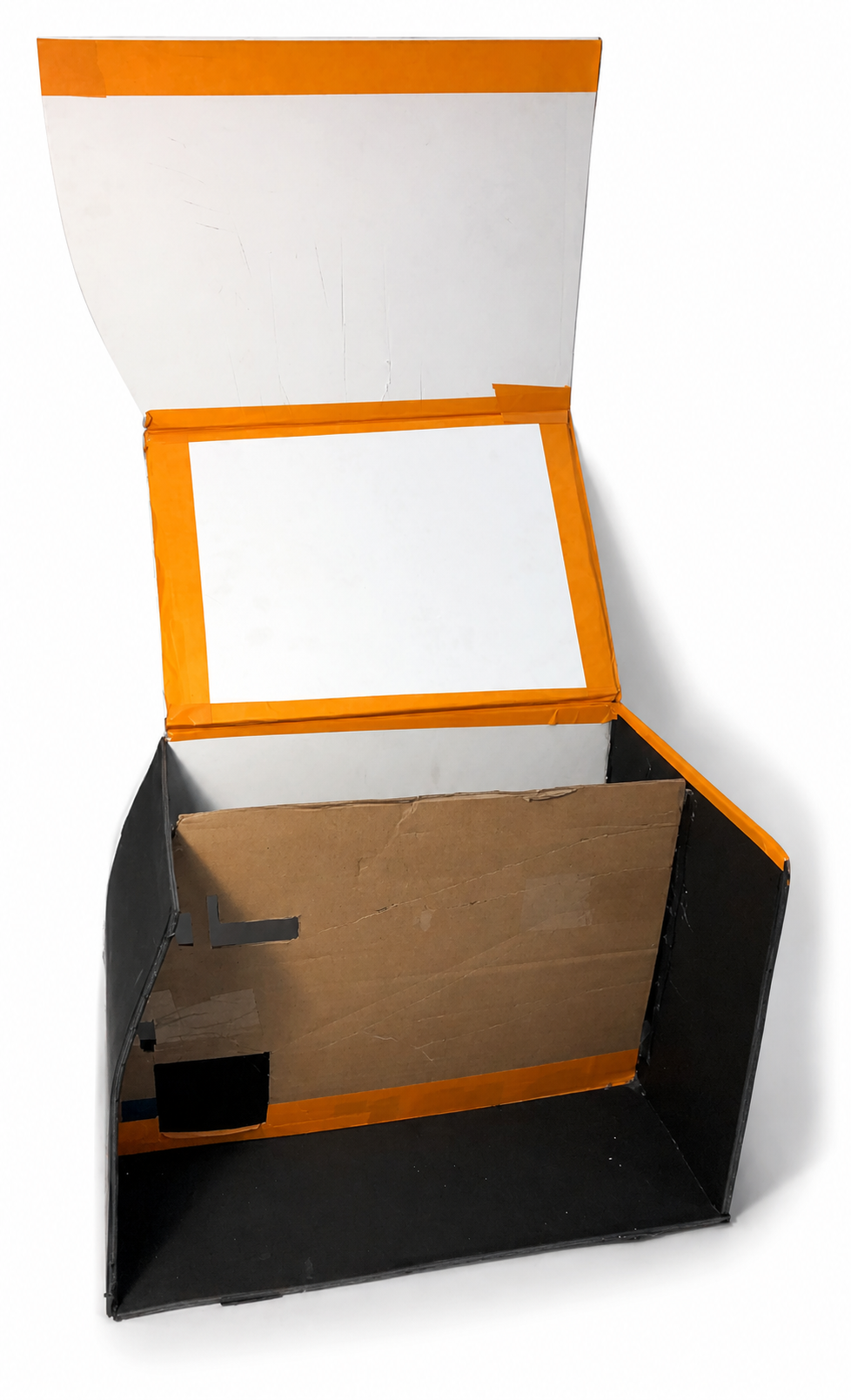
The external structure was recreated through a rapid prototype to preserve the sense of scale and form when moving on to the ideation phase.
ideation & Prototyping
ideation & Prototyping
They are often used as shelves for tools not in use, which makes servicing and transporting it rather cumbersome.
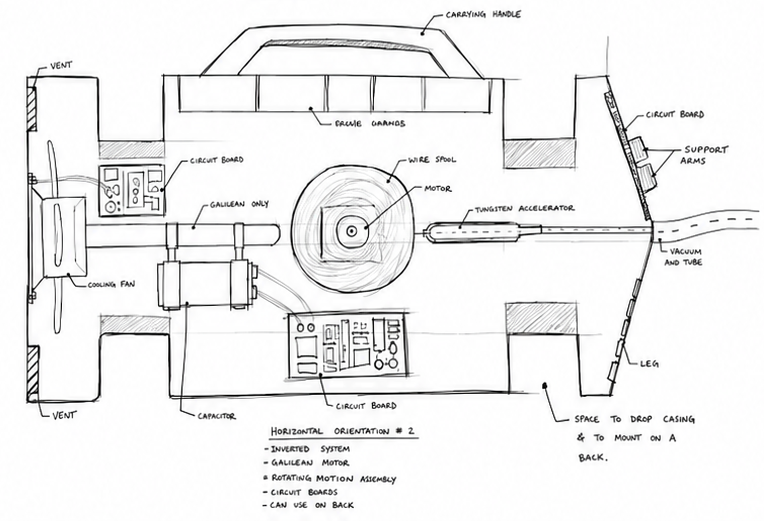
The internal components and wiring systems are complicated and add a considerable weight, making the welder even more difficult to move around.
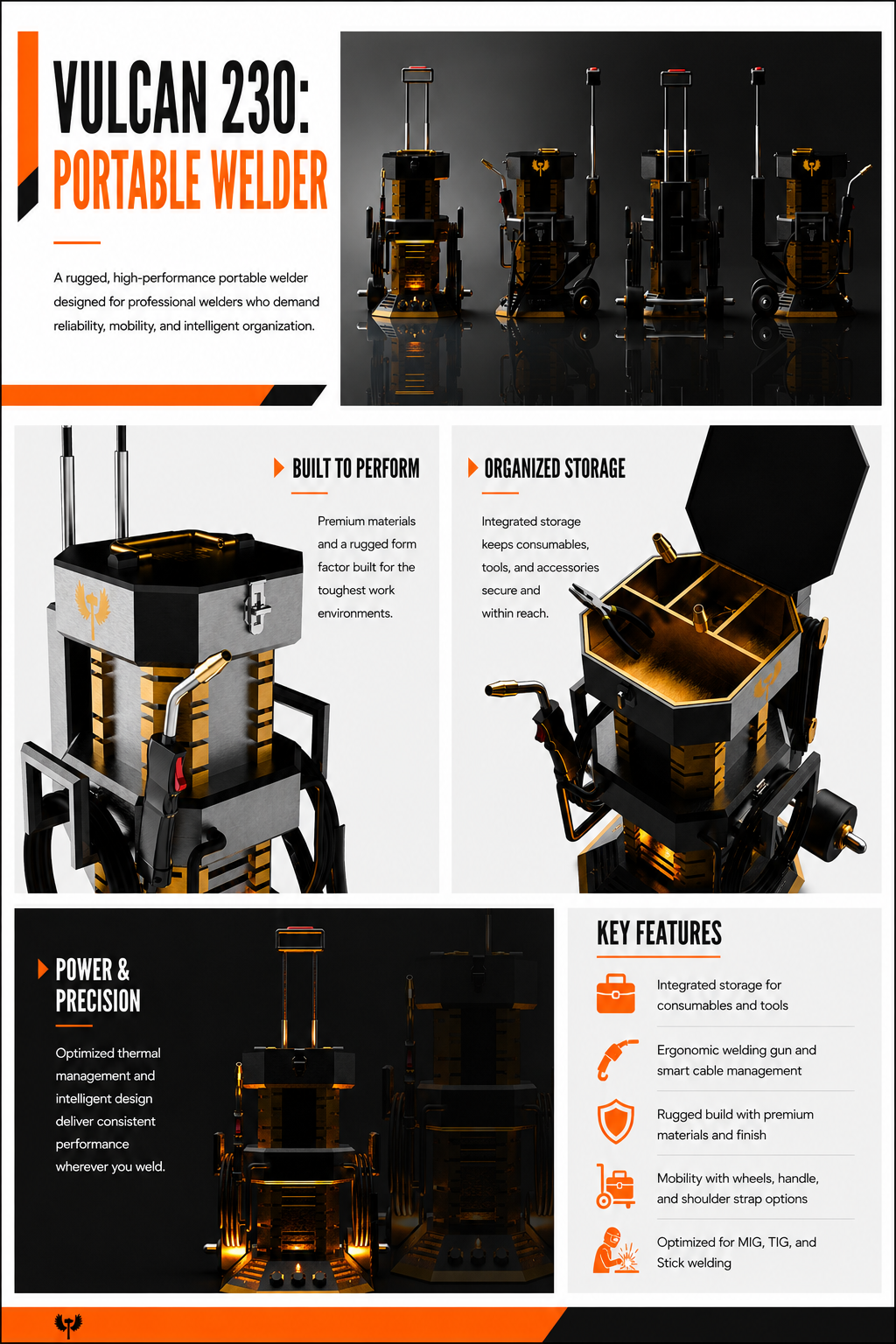
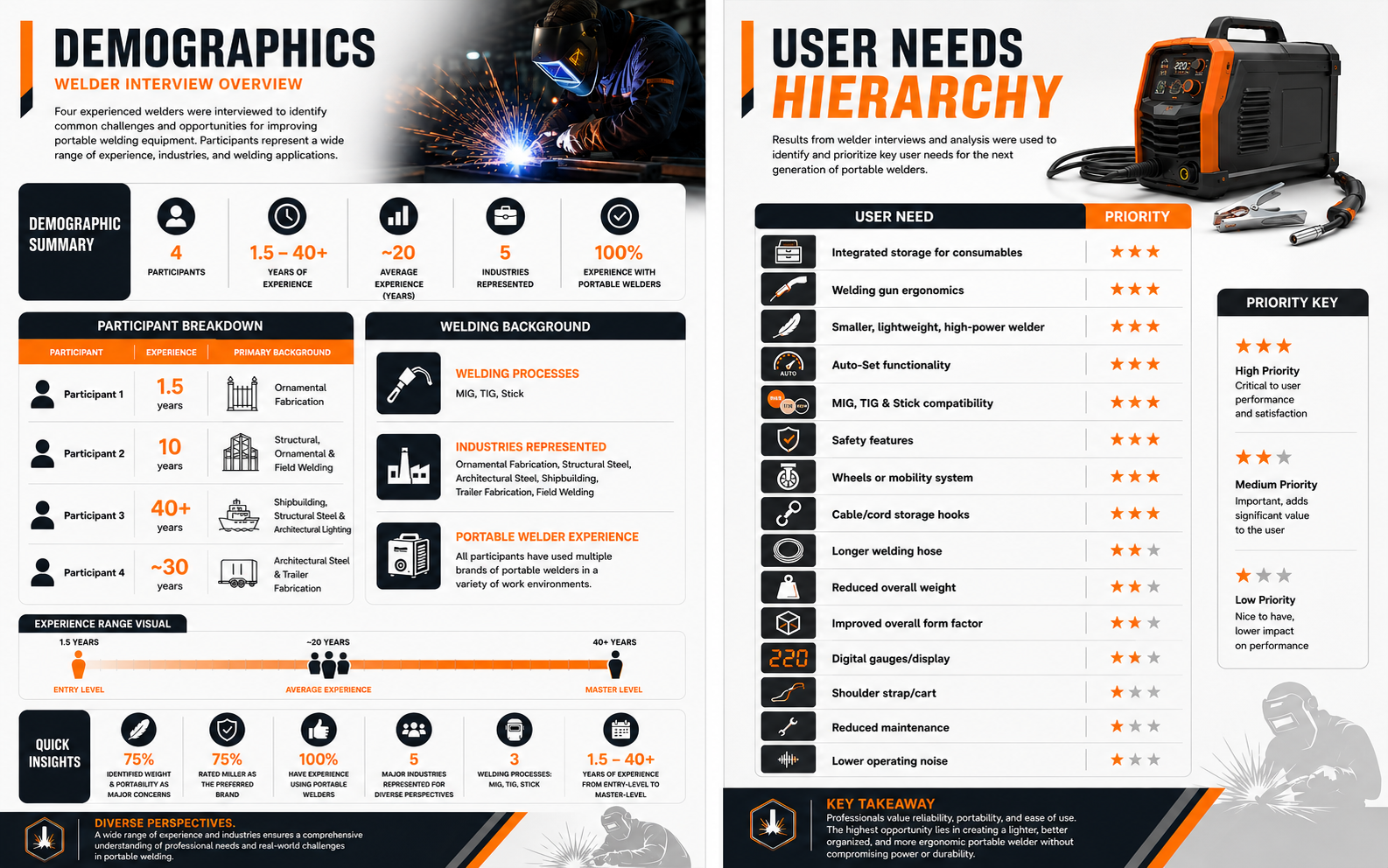
With these pain points identified, the ultimate goal of this re-design is to increase the portability of the welder, while improving on its ability to store tools and organize the welding gun. Secondary improvements include reducing the Okala Impact Factors and reimaging a welding machine aesthetic.